
Quick answer
Boracay scuba diving depth typically ranges from 5 to 30 meters depending on the site. Shallow reefs like Crocodile Island average 8 to 15 meters, suitable for Open Water divers, while advanced sites such as Yapak Wall and Camia Wreck reach 25 to 30 meters and require Advanced Open Water certification. Most recreational dives stay within the 18-meter no-decompression limit.
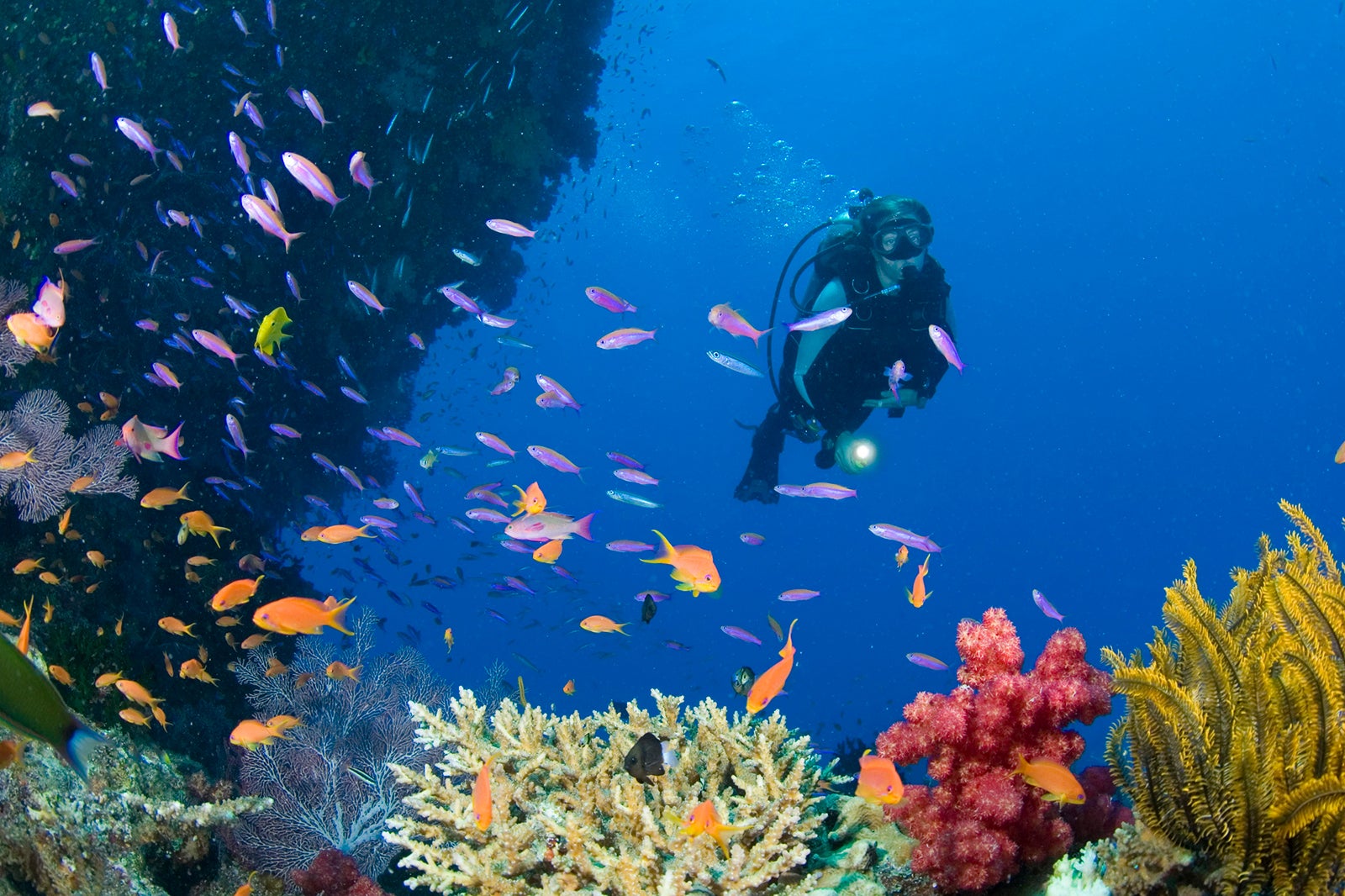
Boracay's underwater topography creates natural depth zones that separate beginner-friendly shallows from technical-grade descents. The island sits on a limestone shelf that slopes gradually on the eastern side and drops steeply along the western and northern coasts, forming the depth variation divers encounter across fifteen charted sites. Shallow coral gardens between five and twelve meters dominate the coastline near White Beach and Bulabog Beach. These sites host cleaning stations, anemone fields, and juvenile fish populations that thrive in sunlit water. Open Water divers spend most bottom time here, where no-decompression limits extend beyond sixty minutes and ascent planning remains simple. Crocodile Island, the most visited shallow site, plateaus at ten meters before a gentle slope to fifteen meters, allowing extended exploration without depth-related complications. Intermediate walls and sloping reefs between fifteen and twenty-two meters form the middle tier. Laurel Island and Balinghai Beach fall into this range, offering reef walls that transition into sand channels. Advanced Open Water certification opens access to these sites, where thermoclines become noticeable and marine life density increases. Larger pelagics—trevally, barracuda, occasional reef sharks—patrol the deeper sections, and coral coverage shifts from branching acropora to massive porites formations. The deepest recreational sites—Yapak Wall, Camia Wreck, and Friday's Rock—descend beyond twenty-five meters. Yapak Wall drops vertically from eighteen meters to well past thirty, its face covered in gorgonian fans and black coral. The Camia Wreck rests at twenty-eight meters, its structure colonized by soft corals and hosting schools of snapper. These depths require careful dive planning, shorter bottom times, and safety stops. Nitrogen absorption accelerates, and contingency air reserves become non-negotiable. Dive operators restrict these sites to certified Advanced divers with logged experience, and most enforce a maximum depth of thirty meters to stay within recreational limits. Understanding Boracay's depth zones allows you to match sites to your training, manage no-decompression limits effectively, and plan multi-dive days that balance shallow coral exploration with deeper wall dives. Depth certification is not arbitrary—it reflects the physiological and navigational skills each range demands.
“Boracay's limestone shelf creates natural depth zones that separate beginner-friendly shallows from vertical walls requiring advanced certification.”
Understanding Boracay Scuba Diving Depth and Site Classifications
Boracay diving sites offer a wide spectrum of depths suitable for various certification levels, ranging from shallow coral gardens to technical wall formations. Understanding these classifications ensures safe underwater exploration tailored to individual experience.
3 to 10 meters
Shallow reef areas like Angol Point provide gentle depths ideal for introductory dives and training exercises. These sites feature coral formations accessible to entry-level divers under professional supervision.
10 to 18 meters
Intermediate dive sites such as Crocodile Island offer mid-range depths where diverse marine life congregates along reef slopes. This depth range allows for extended bottom times while observing vibrant reef ecosystems.
18 to 30 meters
Advanced sites including Yapak 1 and Yapak 2 reach deeper profiles requiring specialized certification. These wall dives often feature stronger currents and pelagic species found at the edge of the continental shelf.
Safety depth standards
Standard recreational diving limits are set at 40 meters by major training agencies globally. Boracay operators adhere to these limits to mitigate risks associated with nitrogen narcosis and decompression sickness.
Site classification criteria
Dive sites are categorized by local operators based on maximum depth and current intensity. These designations help match site conditions with the diver's logged experience and training level.
Buoyancy control requirements
Proper weight distribution and buoyancy control are essential when navigating varying depths in Boracay. Maintaining neutral buoyancy protects the fragile coral structures commonly found at shallower depths.
Optimal Timing for Boracay Scuba Diving Depth and Visibility
The best arrival window for diving in Boracay is 08:00–10:00, as these morning hours provide the most consistent underwater visibility and calm sea conditions. This window minimizes the impact of surface chop on light penetration, which is vital for maintaining clarity at various depth ranges.
Dry Season (Nov–Apr)
Moderate to high25°C to 32°C; stable conditions. This period offers the clearest water for deeper dives and multi-level excursions.
Wet Season (May–Oct)
Low25°C to 30°C; potential for monsoon shifts. Visibility may fluctuate due to localized rainfall and wind patterns.
Weekday Mornings
Low—
Arriving between 08:00 and 10:00 ensures calmer surface waters and optimal light, enhancing visibility at depth.
Verdict: The optimal window for scuba diving is during the dry season from November to April, specifically arriving between 08:00 and 10:00 to maximize visibility.
Daily Operational Hours for Boracay Scuba Diving Depth Access
Dive operators on Boracay maintain a consistent weekly schedule to accommodate varying underwater conditions. The standard operational hours apply throughout the week to ensure access for all diving activities.
| Monday | 08:00–17:00 | |
|---|---|---|
| Tuesday | 08:00–17:00 | |
| Wednesday | 08:00–17:00 | |
| Thursday | 08:00–17:00 | |
| Friday | 08:00–17:00 | |
| Saturday | 08:00–17:00 | |
| Sunday | 08:00–17:00 |
Boracay Scuba Diving Depth Experiences and Associated Fees
There is no public entrance fee for scuba diving in Boracay. Instead, costs are determined by the individual dive shop, the depth of your chosen site, and your specific certification requirements.
While there is no entrance fee, divers typically pay per session, with total costs depending on the certification level and depth required for the dive site.
Navigating to Boracay Scuba Diving Depth Departure Points
Most scuba diving departures for Boracay originate from White Beach, which serves as the primary hub for local dive operators. Visitors can reach this area via the island's main transport artery, Boracay Circumferential Road, using local shuttle services.
Caticlan Airport to Caticlan Jetty Port via Boracay Circumferential Road
Caticlan Jetty Port to Cagban Port
Cagban Port to White Beach area
Main Road shuttle to White Beach Station access points
Pre-Visit Checklist for Boracay Scuba Diving Depth Requirements
Proper preparation ensures safe dives at all depths around Boracay's dive sites.
-
Bring your certification card — Dive operators require proof of your certification level before allowing deeper dives.
-
Complete a medical clearance form — Some dive shops require medical approval for depths beyond 18 meters, especially for first-time visitors.
-
Pack or arrange wetsuit rental — Water temperature stays warm year-round, but thermal protection matters on repetitive deeper dives.
-
Verify your dive computer battery — Depth monitoring becomes critical when exploring sites below 20 meters.
-
Review your buoyancy skills — Depth changes affect buoyancy control, particularly when transitioning between shallow reefs and deeper walls.
-
Confirm nitrox availability if certified — Enriched air extends bottom time on Boracay's 25–30 meter sites.
-
Arrive between 08:00–10:00 — Morning conditions offer the best underwater visibility and calmer seas for depth dives.
Check availability
Common Questions About Boracay Scuba Diving Depth
Everything you need to know about boracay scuba diving depth